
Planning a lowland heath walk for birdwatching

Why lowland heath rewards a bit of planning
Lowland heath looks empty from the car park, and that is part of its charm. It is also one of the rarest habitats in Britain, with well over 80 per cent lost in the past two centuries. What survives — mostly in Dorset, Hampshire, Surrey, Suffolk, Norfolk and Pembrokeshire — is a mosaic of heather, gorse, bracken, scattered birch and bare sandy tracks. The birds that live there are specialists you will struggle to find anywhere else, and they are patchily distributed even within a good site.
That patchiness is why a little preparation pays. Knowing which block of heather is worth an hour, where the path is firm, and whether the site is open to the public that day turns a pleasant trudge into a proper morning's birdwatching.
Check access rights, closures and ground conditions
Much lowland heath in England and Wales is mapped as open access land, which means you can legally walk off-path across it. That right does not apply everywhere, and it is always overridden by specific bylaws or temporary closures. A few minutes online the evening before saves a wasted journey.
- Confirm the site is open access land on an up-to-date map, as boundaries are amended and some commons are excluded.
- Reserves managed by conservation charities often ask you to stay on waymarked routes for habitat reasons. Follow the signs on the day.
- Some heaths sit on military training areas. Check firing times before you travel, and never enter when red flags or warning notices are up.
- Sandy tracks drain well, but hollows can hold water after heavy rain. Boots with grip are sensible from October to April.
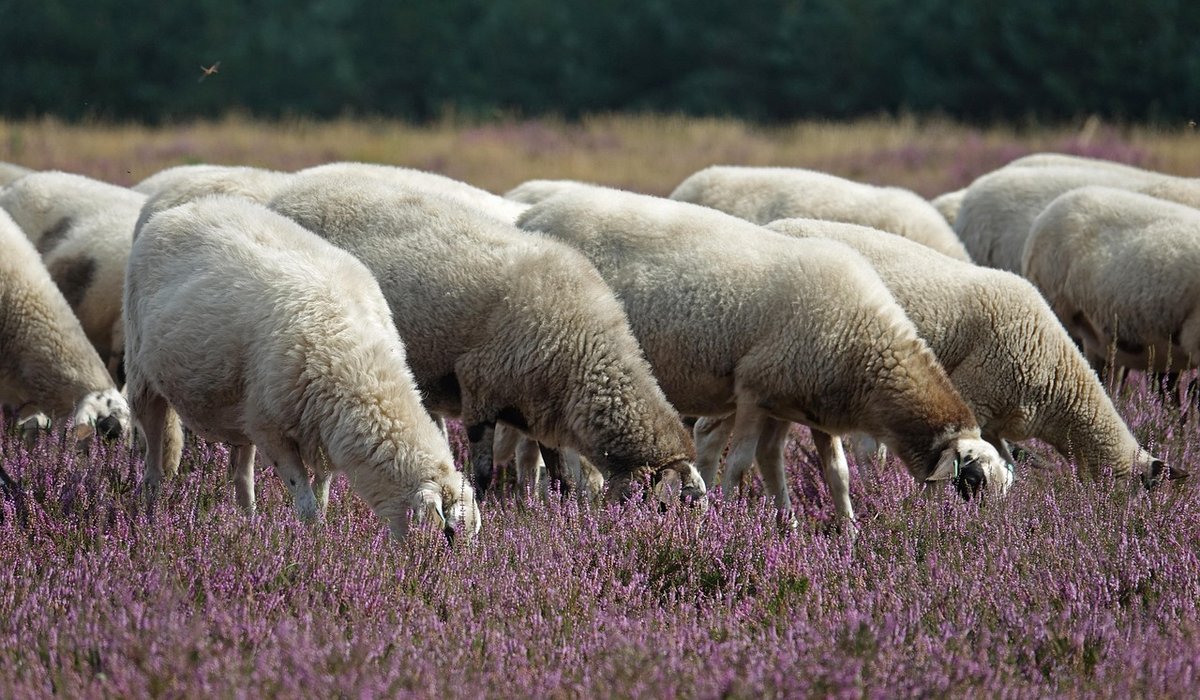
- Grazing animals — ponies, cattle, sheep — are a sign of good management, not a problem. Give them room, keep gates as you find them and watch for temporary electric fencing.
- Many sites require dogs on leads between March and July to protect ground-nesting birds. A few exclude dogs altogether.
Before setting out, note a grid reference for parking, a second option if the car park is full, and where the path crosses a road or railway. Heath paths braid and fade, and a large-scale map is more use than a phone screen in bright sun.
Time your visit to the season and the day
Song peaks at dawn from late April to early June, when Dartford warblers, stonechats, woodlarks and tree pipits are all in voice. By nine in the morning in midsummer the heath can go quiet and hot, so an early start is worth the alarm.
Winter heaths are quieter but hold merlin, hen harrier and short-eared owl, along with flocks of redpoll and siskin in the birch. Light is best in the first two hours after sunrise and the last two before dusk. Wind matters more than most people expect: a stiff breeze suppresses song and pushes small birds into shelter, while a light breeze after a still, clear night is close to ideal.
Work the heather edges for stonechats and Dartford warblers
Both of these heathland specialities prefer the transition zone, where mature heather meets gorse or where scrub gives way to open ground. Resist the urge to march into the middle of a block. Walk the edge slowly, stop often, and let the birds come to you.
Stonechats are the easy one. They perch conspicuously on gorse tips, flicking wings and tail, and give a sharp tick-tack like two pebbles tapped together. They are usually in pairs, so if you find one, look for the other nearby.
Dartford warblers are a different proposition: dark, long-tailed, with a rufous breast and a scratchy, hurried song. Listen for a low scolding churr from deep inside gorse, then wait at a gap in the scrub and watch for movement low down. They rarely sit up for long. Numbers swing sharply with the weather — a run of mild winters lets them spread, while a hard frost sets them back badly — so do not assume last year's hot spot will deliver.
Other edge species repay the same patient approach: whitethroat in bramble, linnet on gorse tips, tree pipit singing in a fluttering display flight from a birch, and yellowhammer where the heath borders farmland.
Scan the skyline and far scrub for raptors
Find the highest point you can reach without leaving the path, then sweep the sky slowly in overlapping bands, using binoculars near-to-far rather than jumping straight to the horizon. Check distant conifer edges, fence posts and pylons as well as open air.
- Hobby — summer visitor, fast and scythe-winged, often hunting dragonflies over heath pools.
- Kestrel and buzzard — year-round, hovering and soaring respectively.
- Merlin — winter, low and direct flight over open ground; a ridge gives the best chance.
- Hen harrier — winter on the larger heaths, quartering low; females and young birds are brown with a bright white rump.
- Short-eared owl — winter, hunting low over rough grass in the hour before dusk.
Walking lightly on fragile heath
Heathland birds nest on the ground, and a single careless shortcut through heather or bracken in April, May or June can crush eggs or leave chicks exposed. Stay on the edge of blocks during the breeding season even where access allows otherwise, and keep to established tracks where the ground is bare and sandy.
Take all litter home, light no fires, and leave drones at home — they disturb wildlife and irritate other visitors. Check yourself for ticks after a walk, especially in summer, and report any ringed or injured bird to the site office. Walk lightly, and this strange, quiet landscape will keep giving up its secrets for years to come.

Joeby Ragpa
This template is so awesome. I didn’t expect so many features inside. E-commerce pages are very useful, you can launch your online store in few seconds. I will rate 5 stars.
ReplyAlexander Samokhin
This template is so awesome. I didn’t expect so many features inside. E-commerce pages are very useful, you can launch your online store in few seconds. I will rate 5 stars.
ReplyChris Root
This template is so awesome. I didn’t expect so many features inside. E-commerce pages are very useful, you can launch your online store in few seconds. I will rate 5 stars.
Reply